Virtual Private Clouds(VPC)
·
mehmet sat
- You can think of VPCs as a logical data center in AWS
- It consists of :
- Internet or Virtual Private Gateways
- Route Tables
- Network Access Control Lists
- Subnets
- Security Groups
An Example of VPC Architecture
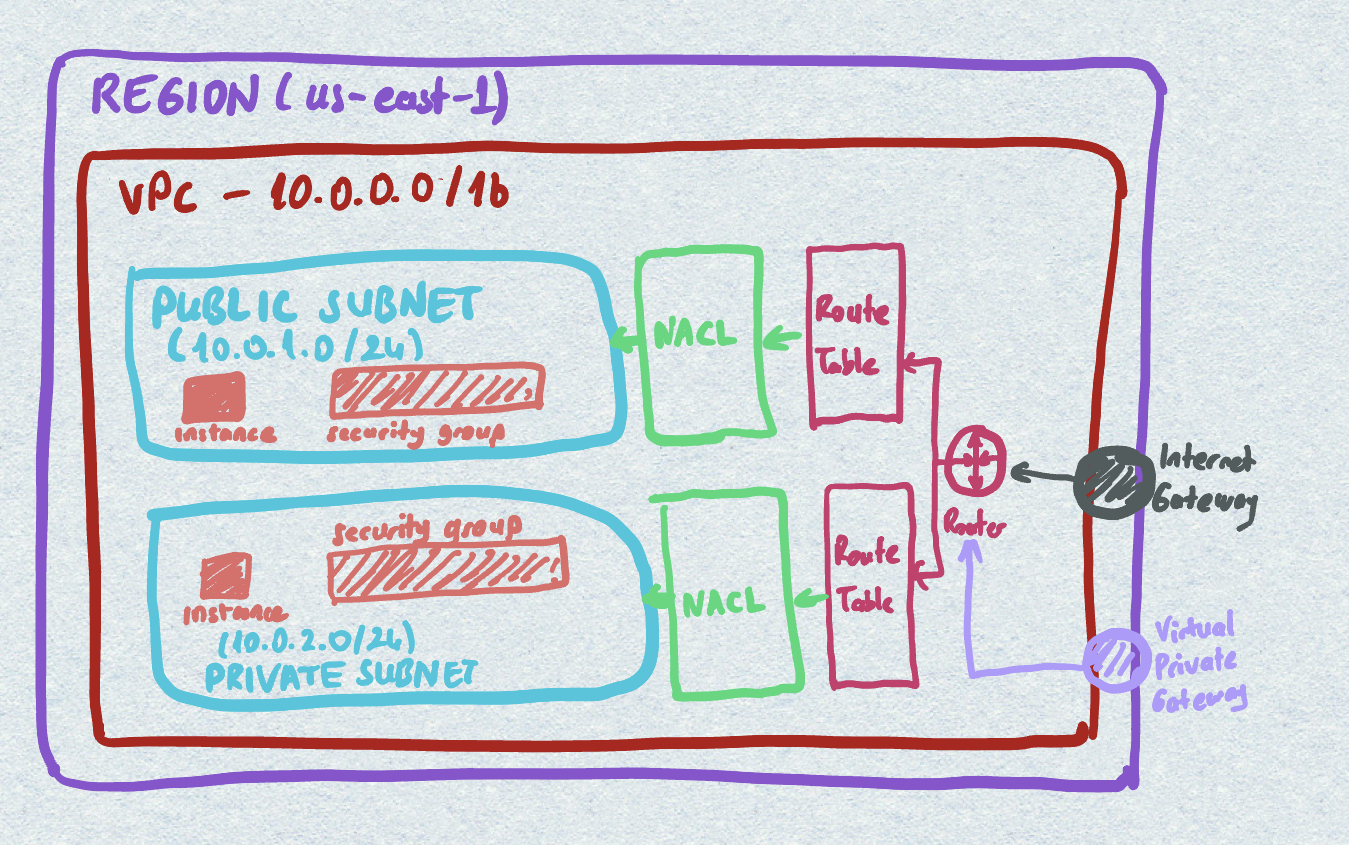
- Here you can see a custom VPC created in us-east-1 region with the CIDR Block Range of 10.0.0.0/16
- In this VPC, there are two subnets — one is public that has access to the internet, and the other one is private subnet
- We have 2 Network Access Control Lists one for the public and one for the private subnet. We should know that one subnet only can associate with one NACL.
Network Access Translation (NAT Gateways)
- By default if you have created a Private Subnet, it cannot access to the internet and other services in the AWS
- By creating a NAT Gateway, you can access to internet and/or other AWS Services outside your subnet without allowing external services to initiate connection to your subnet
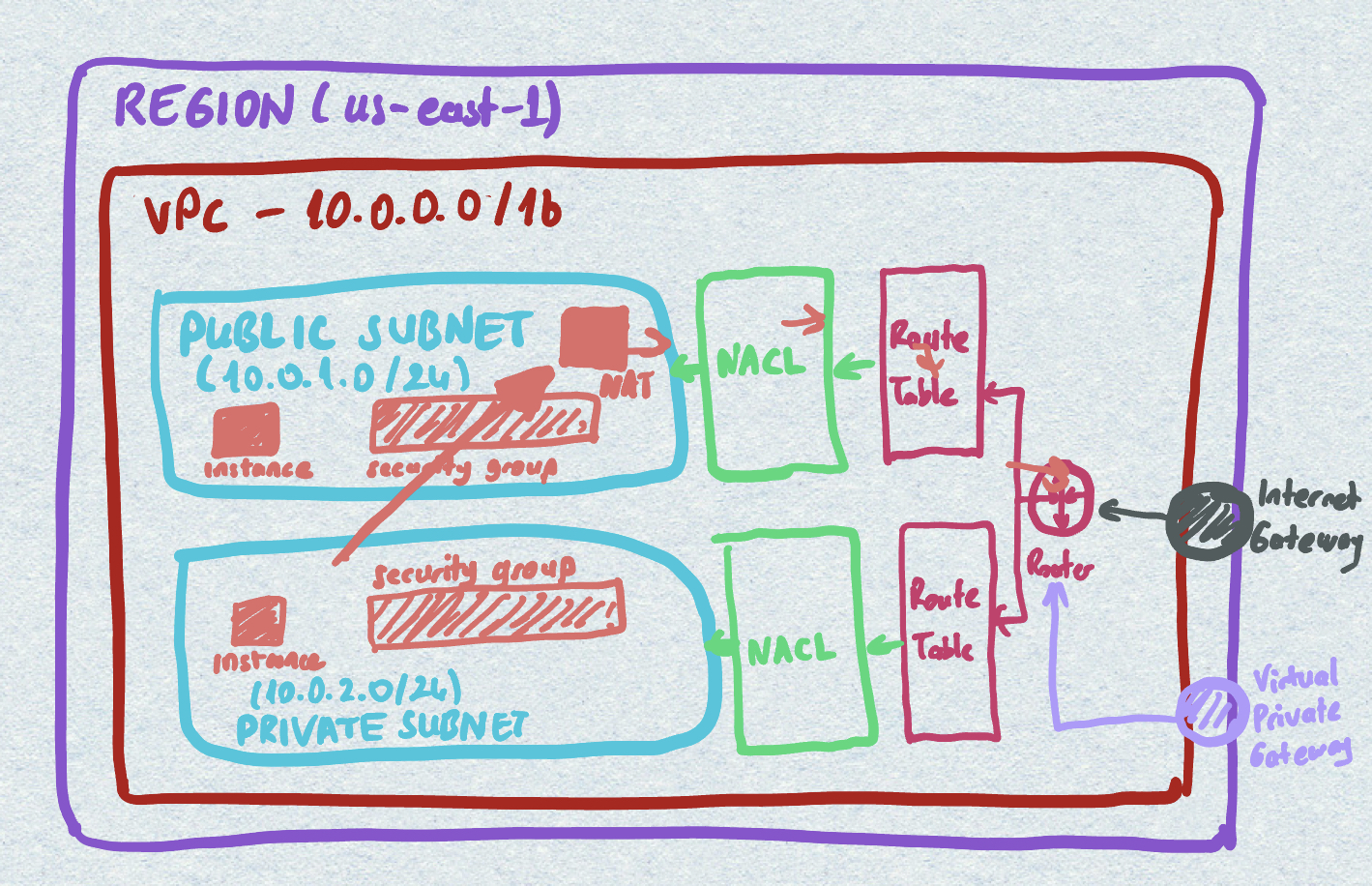
- NATs are redundant in the Availability Zone
- It is sufficient for heavy workloads
- No need to patch, not associated with security groups, and automatically assigned a public IP Address
- If you have resources that share an NAT Gateway in different AZs, if NAT Gateway’s AZ is down, resources in the other AZs lose internet access
Network Access Control Lists (NACL)
- Default NACLs → Your VPC comes with default NACL, and by default it allows all inbound and outbound traffic
- Custom NACLs → You can create custom NACLs, by default they deny all inbound and outbound traffic until you add rules
- Each subnet in a VPC must be associated with a NACL. If you didn’t associate it explicitly the subnet will automatically associated with default NACL
- You can block IP addresses using NACLs, not security groups
- You can associate a NACL with multiple subnets
- NACL contains a numbered list of rules that is executed from first to last.
- NACL have separate inbound and outbound rules in other words they are stateless
Direct Connect
- Direct Connect directly connects your data center to AWS
- Useful for high-throughput workloads
- Helpful when you need stable and secure connection
VPC Endpoints
- When you want to connect AWS Services without leaving the Amazon Internal Network
- 2 types of VPC Endpoints:
- Gateway Endpoints → Support S3 and DynamoDB
- Interface Endpoints → Support almost all services
VPC Peering
- Allows you to connect a VPC with another via a direct connect network route using private IP addresses
- Instances behave as if they on the same private network
- You can peer VPCs with other AWS Accounts as well as the other VPCs in the same account
- Peering is in star configuration e.g. 1 central VPC peers with other VPCs. Transitive pairing is not allowed
- You can peer VPC between regions
AWS Private Link
- It allows to peer tens to thousands VPCs
- Doesn’t require VPC peering, no route tables, NAT gateways, internet gateways etc.
- Requires a Network Load Balancer on the service VPC, and Elastic Network Interface(ENI) on the customer VPC
AWS Transit Gateway
- It is used for simplifying network topologies by using root tables to communication between VPCs talk to one another
- It works with Direct Connect as well as VPN connections
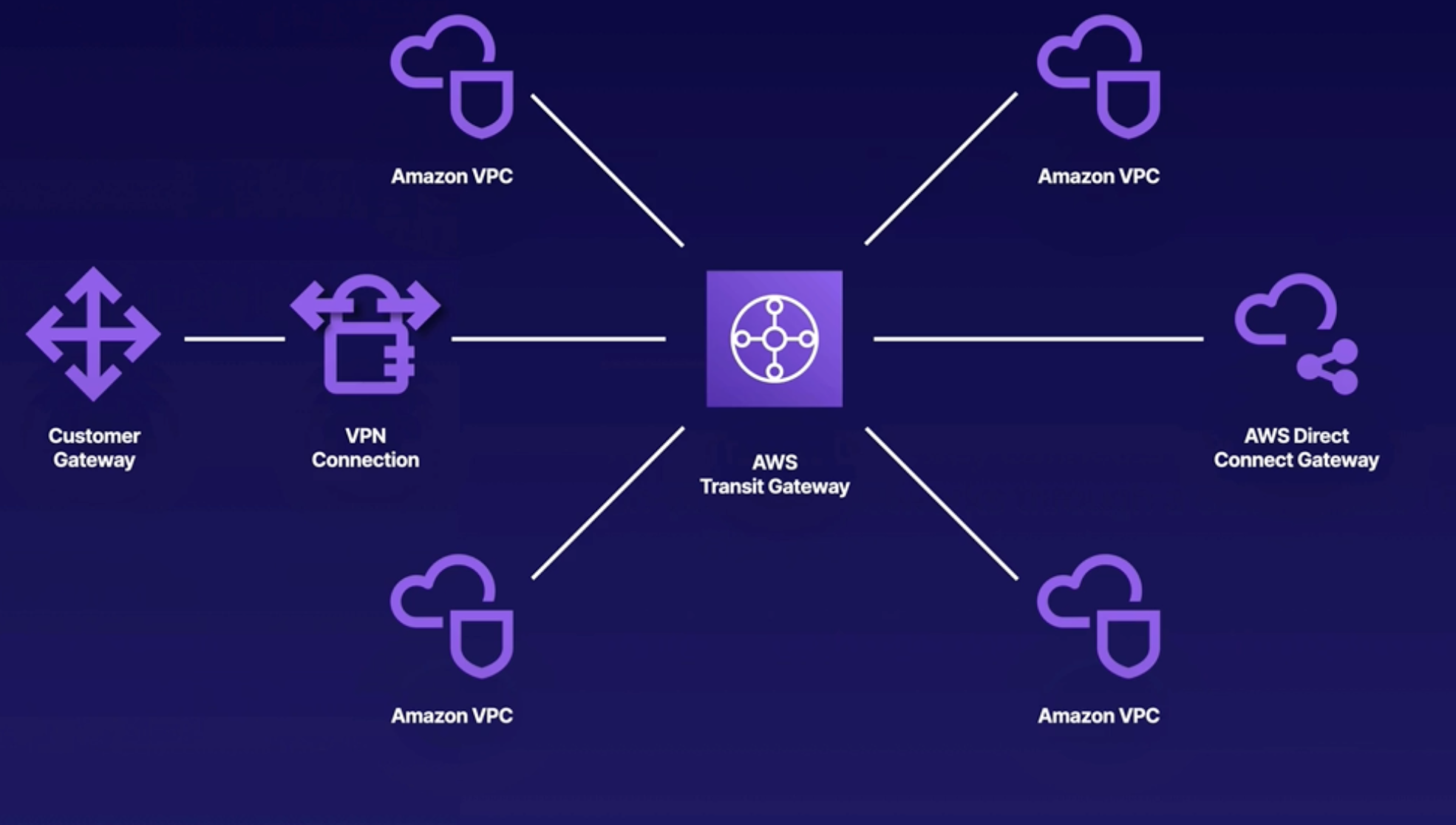
VPN Hub
- It simplifies VPN Network topology, it allows to talk from different locations with the same VPN hub